Commit with confidence, negotiate with facts. We help enterprises turn their cloud spend into a defensible consumption plan, right-size commitments with AWS, Microsoft Azure, Google Cloud and Oracle Cloud, and secure the discounts, funding and terms that match their growth. Where public cloud is not the right fit, we help you build and source a hybrid setup with private and sovereign cloud.

Strategic support across the major hyperscalers (AWS, Microsoft Azure, Google Cloud and Oracle Cloud Infrastructure), from the first consumption forecast to signature and beyond.
Turn 6 to 12 months of actual spend into a three- to five-year consumption plan with conservative, realistic and aggressive scenarios. We model organic growth, migrations, AI workloads and optimization programs, so every number you put on the table is grounded in your own data.
Set the commitment you can confidently meet, whether it is a Microsoft MACC, an AWS Private Pricing Agreement, a Google Cloud commitment or Oracle Universal Credits. We test every contract year against your forecast scenarios and quantify the shortfall risk before you sign, not at true-up.
Build the full ask, not just the headline discount: service-specific discounts, migration and innovation funding, support discounts, payment terms, price protection, rollover of unused commitment and marketplace eligibility. Every lever is valued over the full term, with a walk-away, a target and an opening position.
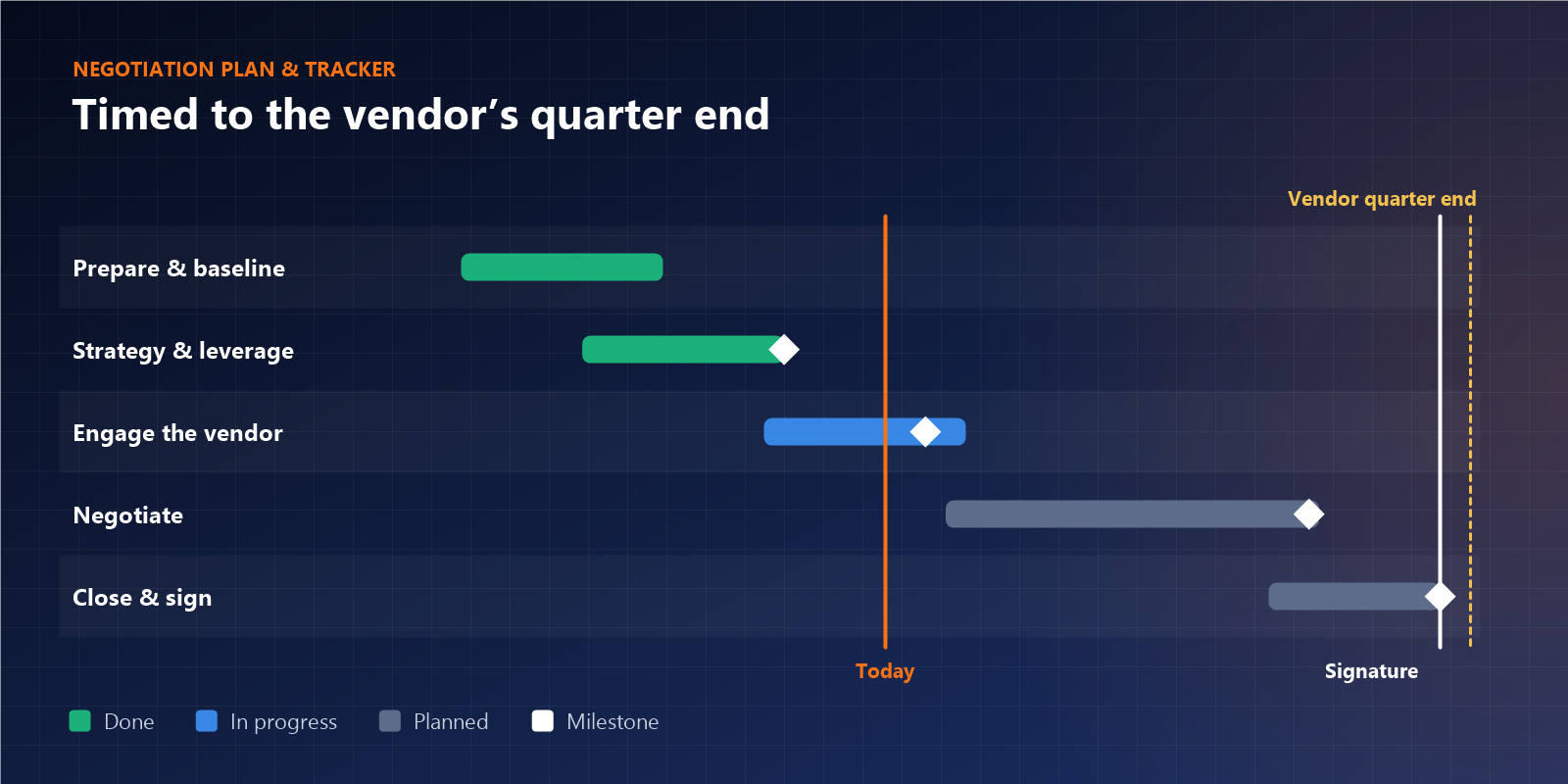
Run the negotiation to a plan that is timed to the vendor's quarter and fiscal-year ends. We prepare counter-proposals, track every vendor offer against your targets round by round, and steer escalation and governance up to signature.
Create credible alternatives (a second hyperscaler, reseller and marketplace routes, or keeping workloads where they are) to build competitive tension, protect workload portability and avoid lock-in.
After signature, we help you track commitment burn-down, claim the funding and credits you negotiated, and prepare quarterly business reviews. That way the value in the contract reaches your P&L, and your next renewal starts from a strong position.
Our Cloud Consumption Plan Modeler turns your billing data into three forecast scenarios and an indicative commitment. Your position holds up internally with finance, and across the table with the vendor.
Our Cloud Negotiation Modeler values every discount, credit and term over the full contract. We know what one point of discount, or five percent more commitment, is worth before it is discussed, and we never give one without getting something back.
Strivesource has no commercial relationship with cloud providers or resellers. We act solely in the interest of our clients, so every recommendation is driven by value, not vendor incentives.
We support you from the first consumption forecast, through benchmarking against comparable deals, negotiation strategy, counter-proposals and executive steering, up to signature, and with the governance that makes sure the negotiated value is realized.
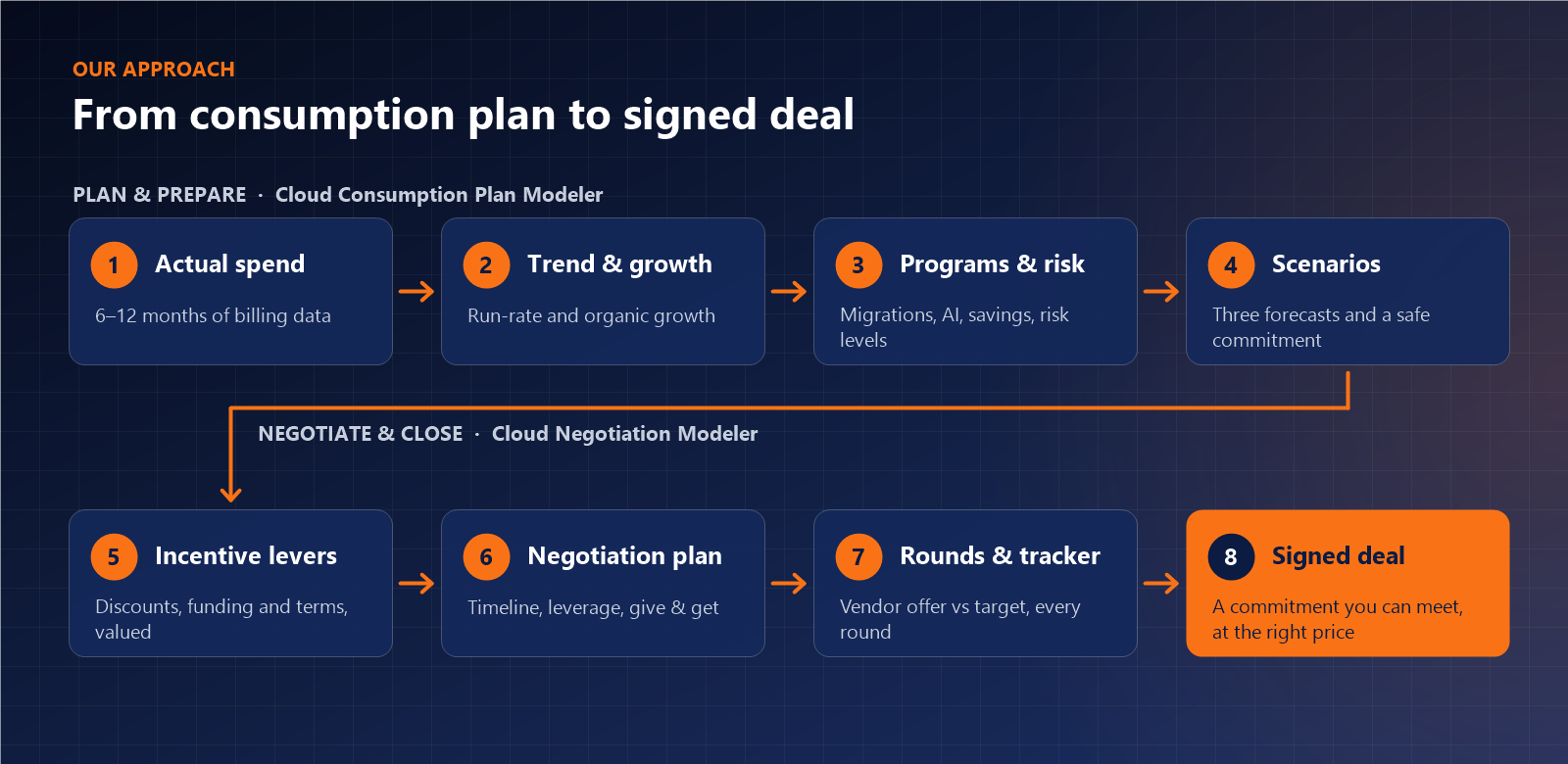
Two purpose-built modelers sit at the heart of every public cloud engagement. The first prepares your position; the second carries it through the negotiation. Both run on your own data and produce outputs you can take straight to your CFO, your board and the vendor.
From actual spend to signed deal: the eight steps across both modelers (illustrative).
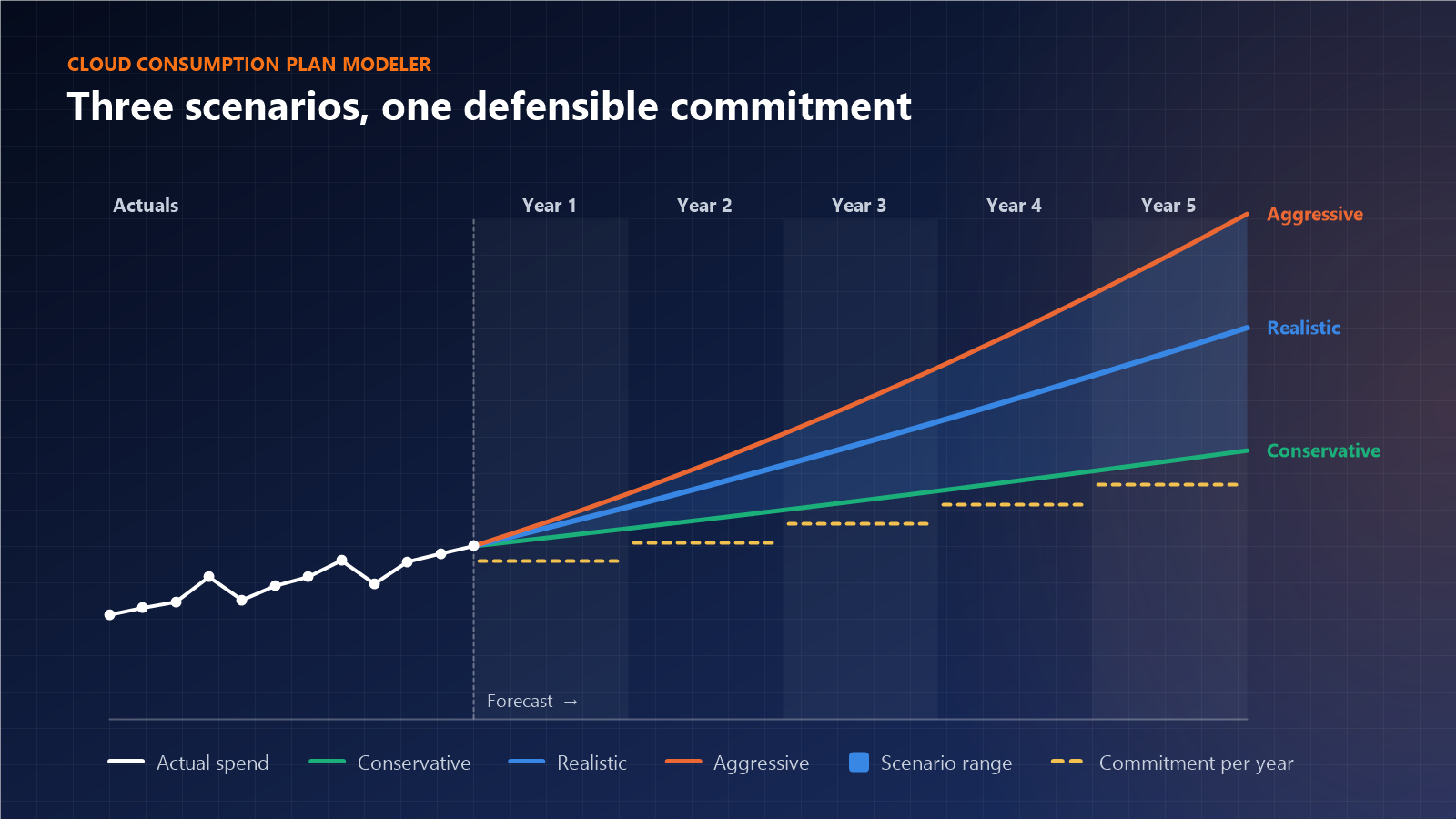
We load 6 to 12 months of your actual cloud spend, straight from a billing export, and build a three- to five-year consumption plan in four steps:
spend is grouped by month, and one-off spikes and credits are kept out of the trend.
today's run-rate and organic growth are measured from your data, with growth slowing over time.
migrations, new products, AI workloads, optimisation and decommissions are added, each with its own timing and risk level.
each scenario counts a different share of every assumption, which produces conservative, realistic and aggressive forecasts.
Three scenarios and a commitment set safely below them (illustrative data).
The consumption plan becomes the baseline for the deal. From there, the Cloud Negotiation Modeler supports the team through every round:
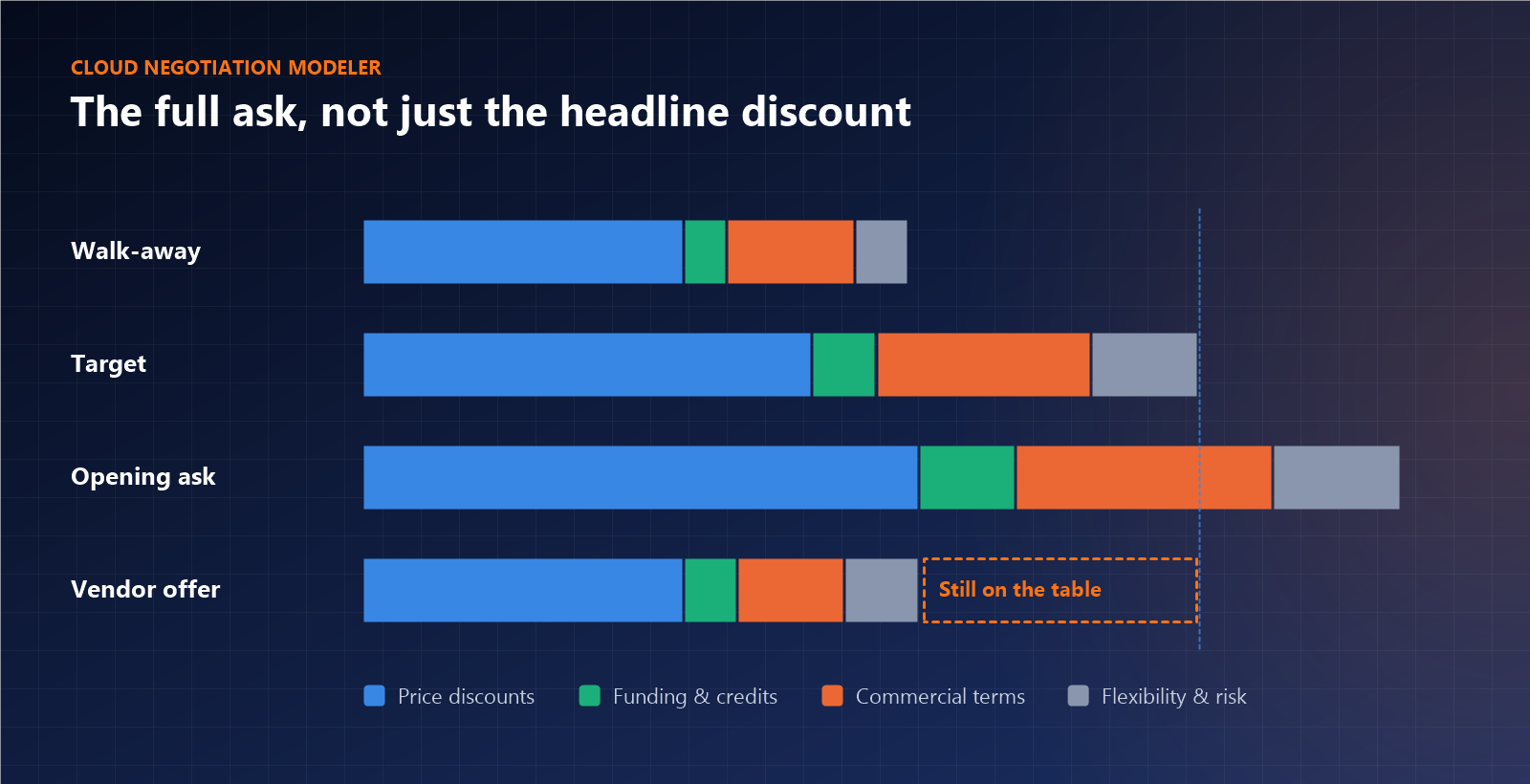
every lever (discounts, funding, payment terms, price protection and flexibility) is valued over the term at five positions: walk-away, target, opening ask, vendor offer and agreed.
a scenario builder lays out the phases, rounds and milestones, timed to the vendor's quarter and fiscal-year ends, and adds a leverage assessment and a give-and-get plan.
owners, due dates and status for every activity, with overdue items flagged.
board-ready slides generated from the live model, in an internal version and a vendor-facing version that never shows your targets or walk-away positions.
The full value of the deal at each position, and what is still on the table (illustrative).
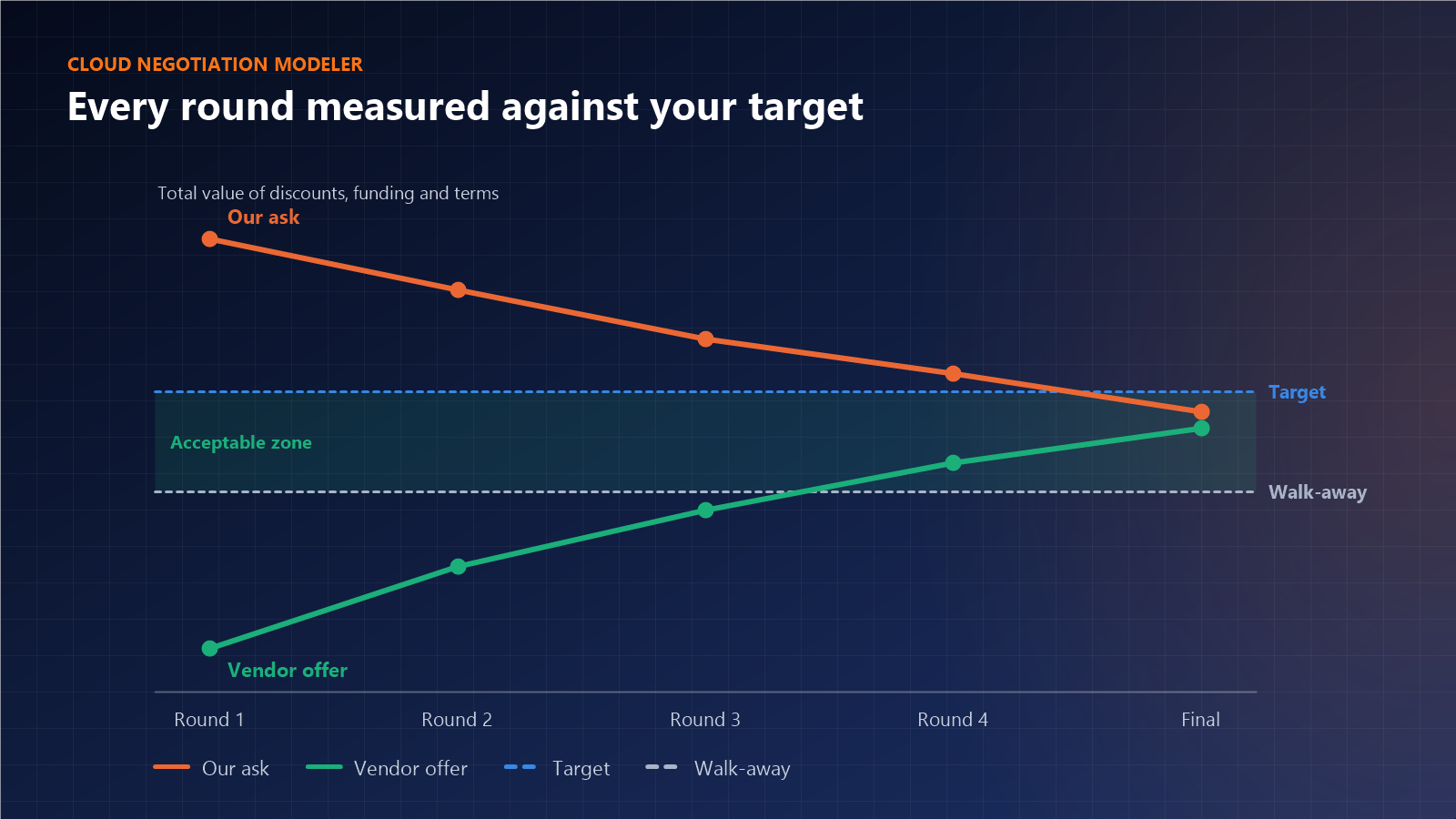
Every round measured against your target and walk-away (illustrative).
A negotiation plan timed to the vendor's quarter end (illustrative).
Public cloud is not the right answer for every workload. Regulation, data protection, cost predictability and dependence on a small number of non-European providers are leading many European organisations to rethink where their workloads run.
We help you investigate a multi-cloud, hybrid setup that combines public, sovereign and private cloud. Then we build the sourcing strategy and run it, from market scan and tender to negotiated contracts, so that every workload lands where it delivers the most value at an acceptable level of risk.
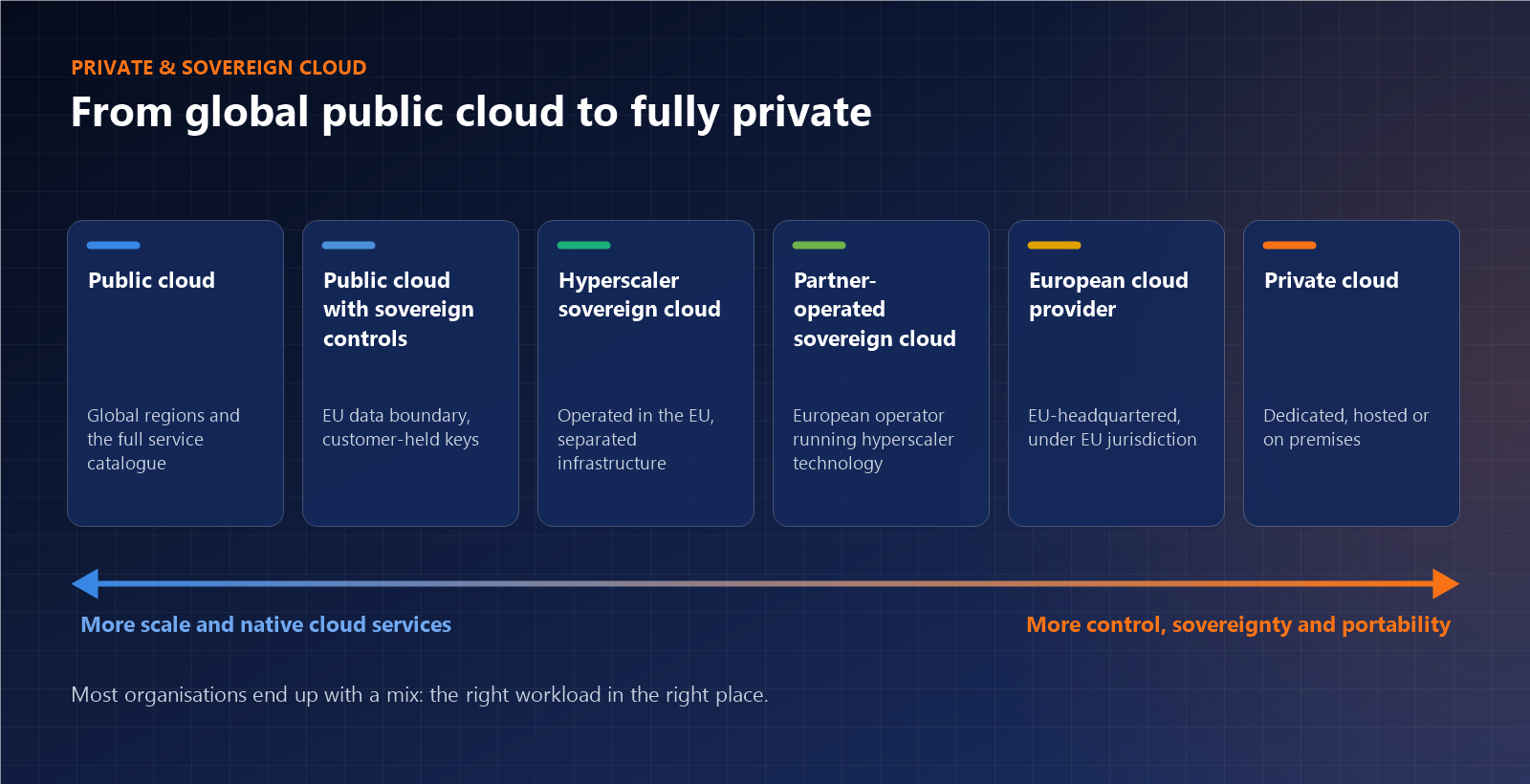
The options range from global public cloud to fully private. Most organisations end up with a mix.
DORA requires financial entities to manage ICT third-party risk and to have exit strategies for critical providers. NIS2 raises the security and supply-chain bar for essential and important entities.
GDPR, data-residency requirements and exposure to extraterritorial laws such as the US CLOUD Act put the question "who can access our data?" on the board agenda.
the EU Data Act makes it easier to switch cloud providers and phases out switching charges by January 2027, which opens real alternatives.
egress charges, steady-state workloads that cost more in public cloud than expected, and licensing changes on private cloud and virtualisation platforms, such as VMware, all change the business case.
relying on one provider for critical services is a strategic risk, and one that regulators and boards increasingly ask about.
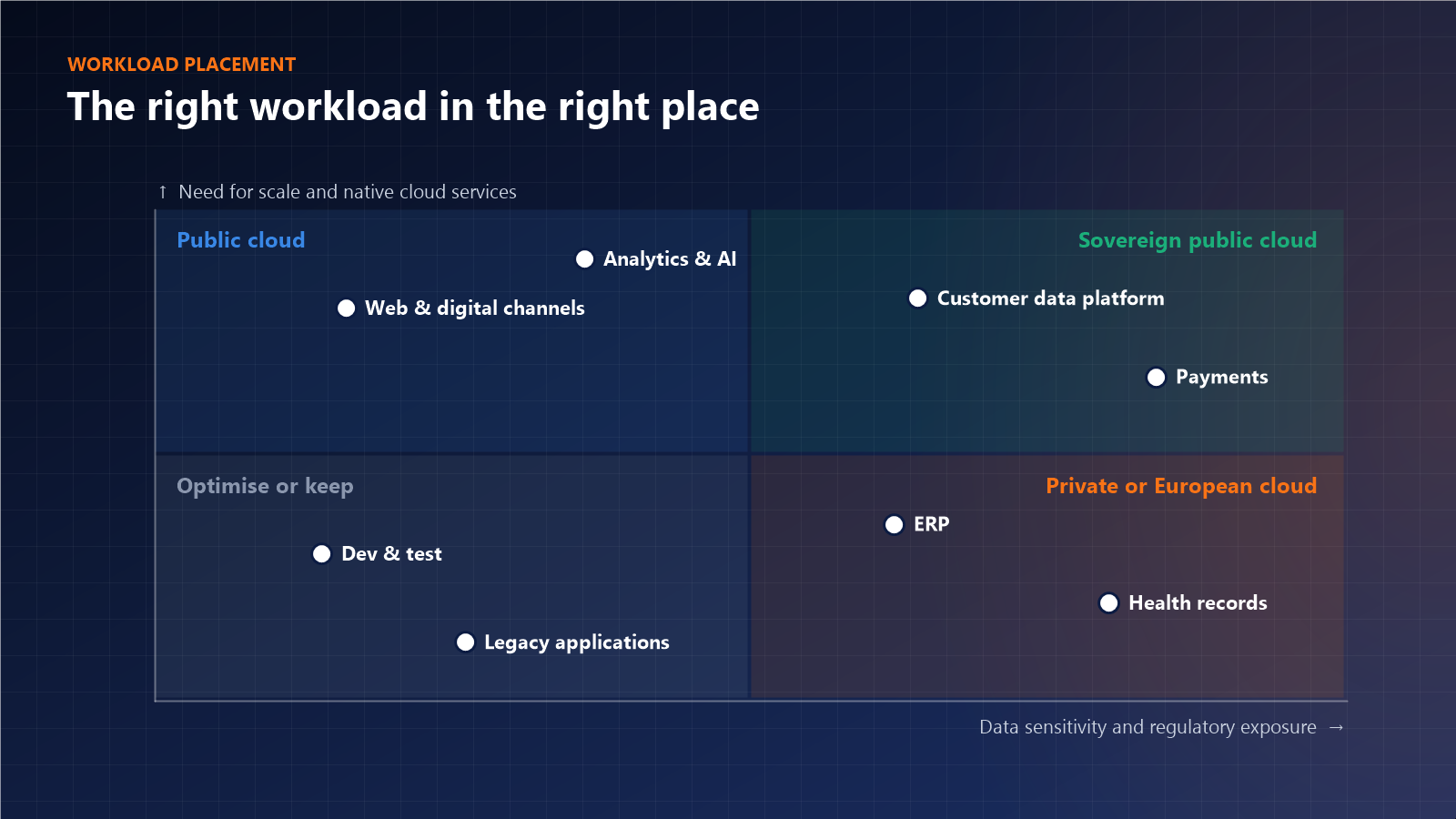
We classify your workloads by data sensitivity, regulatory exposure, performance, portability and cost, and set the level of sovereignty each one really needs. Not every workload needs the highest level, and paying for it where it is not needed is expensive.
We compare the total cost of public, sovereign and private options over three to five years, using the same scenario modelling as our consumption plans. We include the costs that are easy to miss: migration, dual running, egress, operations and exit.
We map the options against your requirements: sovereign offerings from the hyperscalers, partner-operated sovereign clouds, European cloud providers and private cloud platforms, hosted or on premises.
We define the sourcing strategy (scope and lots, shortlist, contract model and the competitive approach) and run the RFI and RFP, the evaluation and the negotiation, with the same round-by-round discipline as our public cloud negotiations.
We make sovereignty contractual, not a marketing claim: data location, operations and support by EU-based staff, key management, sub-processors, audit rights, exit assistance and switching under the EU Data Act.
We renegotiate or replace private cloud platforms, hosting and colocation contracts, including the impact of recent virtualisation licensing changes, and test alternative platforms to create competitive tension.
Each workload is placed by its data sensitivity and its need for scale and native services (illustrative).
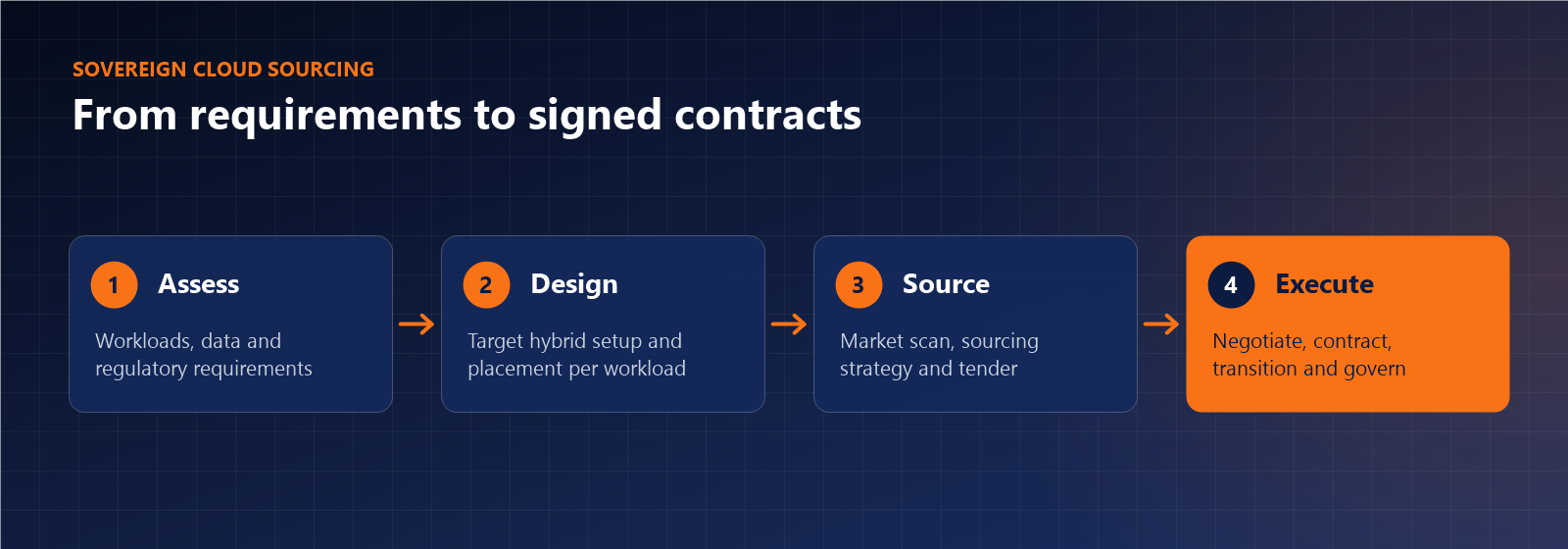
inventory of workloads and data, with the regulatory, security and business requirements for each.
the target hybrid setup and a placement decision for every workload, including the sovereignty level it needs.
market scan, business case per option, sourcing strategy and tender documents.
competitive negotiation, contracts with sovereignty, exit and portability terms, and governance of the transition.
From requirements to signed contracts (illustrative).
Brewing · Global Enterprise
Led an end-to-end Enterprise Agreement renewal and Azure optimization for a global brewery, securing double-digit million investment from Microsoft and multi-year price predictability.
Challenge: An early renewal opportunity for the Enterprise Agreement, based on a significant potential for optimization of its Azure estate, a reshaping of the license scope and an overall restructuring of the Microsoft relationship.
Our work: Strivesource was engaged to lead this process end-to-end. Acting as project lead, the team ran independent benchmarking of Microsoft's proposed commercials, provided hands-on negotiation support and built the internal business case.
Impact: Improved discount and credit structure across both Azure and Microsoft 365, double-digit million investment secured from Microsoft to offset transition and AI-adoption costs, and multi-year price predictability.
Schedule a confidential, no-obligation call with one of our cloud negotiation experts. We'll review your spend, your commitment position and your sovereignty requirements, and outline where the value is.